Skip to content

Full Grain Leather: Classical vs. EU Definition

All Things Leather

All About Bookbinding Leathers: What Makes the Best Leather for Books?

Welcome to the Siegel Leather Insights Blog, your trusted resource for all about bookbinding, specialty leathers, and the timeless art of leather craftsmanship. Whether you’re a master bookbinder, a conservator, or simply passionate about the preservation of fine books, this post explores the science, history, and technique behind the very best bookbinding leathers.

At Siegel Leather, we supply premium, full-grain vegetable-tanned leathers – free from mechanical embossing – to professional bookbinders, conservators, and collectors around the world. Today, we’re taking a closer look at why mechanically grained leathers are discouraged in archival and library-grade bookbinding, and what truly defines long-lasting, high-integrity specialty leathers.

Mechanically Grained Bookbinding Leathers

The Origins of Leather Standards in Bookbinding

In 1842, the eminent physicist Michael Faraday began investigating the rapid decay of leather-bound books in libraries across the UK. His findings revealed that newer leathers – particularly those produced using early chrome tanning and synthetic chemicals – were deteriorating much faster than their predecessors.

Faraday’s observations prompted the formation of The Committee of the Society of Arts on Leather for Bookbinding in the late 19th century. This diverse group of scientists, librarians, and bookbinders conducted a sweeping study of bookbinding leathers exposed to various climates and storage conditions. Their mission: to define which leathers were suitable for preserving books for future generations.

What the Committee Recommended:

One of the committee’s most influential outcomes was a strict recommendation from His Majesty’s Stationery Office:

“The binder undertakes not to use… leather embossed or grained artificially.”

This directive was based on significant evidence that mechanically altered leathers that had been embossed, boarded, or artificially textured were more likely to fail over time. While these leathers were often more visually appealing and cheaper to produce, they lacked the structural integrity needed for longevity.

Understanding the Leather Structure: Grain vs. Corium

High-quality bookbinding leather consists of two primary layers:

  • The Grain – the outer surface from which the hair has been removed.
  • The Corium – the fibrous layer beneath the grain.

The connection between these layers known as the grain-corium interface is critical. Mechanically graining leather disrupts this delicate bond, leading to double hiding, weak breaks, and premature separation of the leather layers. For serious bookbinding leather suppliers, maintaining the natural integrity of this interface is non-negotiable.

Siegel Leather’s Archival-Grade Leathers

At Siegel Leather, we offer a curated selection of vegetable-tanned leathers developed specifically for bookbinding and archival use. These leathers are lab-tested, historically consistent, and most importantly, free from mechanical manipulation.

Here’s a sample of our trusted collection:

  • SF Calf
  • UK Calf
  • Natural Sheepskin
  • Natural Goat
  • .5mm Veg Goat
  • Smooth Historical Goat
  • Capra Granulosa
  • Sokoto™ Morocco
  • Sokoto™ Traditional
  • Genuine Levant

Each hide is carefully selected and treated using traditional tanning methods to ensure beauty, durability, and historical authenticity. As trusted bookbinding leather suppliers, we pride ourselves on offering materials that meet and exceed the standards established by generations of craftsmen and preservationists.

Further Reading

For those who want to explore more about the history of leather in library science and conservation:

Report of the Committee on Leather for Bookbinding

Leather for Libraries

We Value Your Input

Is this information helpful for your practice or project? We’d love to hear from you.
If you have questions, email us directly at [email protected]. We’re always here to support bookbinders, restorers, and artisans in their pursuit of excellence.

Looking for Premium Bookbinding Leather Suppliers?

Choose Siegel Leather. Discover more in our full collection of specialty leathers for premium bookbinding.

Premium Bookbinding Leather: What History and Science Reveal About Long-Term Durability

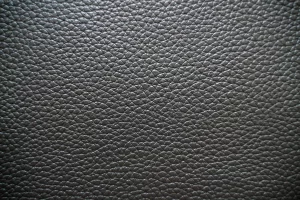
A close-up photograph of a natural goat grain. This is a typical Sokoto™ goatskin.

Anyone who has worked seriously with bookbinding leather for any length of time runs into the same set of questions eventually. Where did this hide come from? Is that grain real? How was it tanned—and did anyone along the way do something to the surface to make it look better than it actually is? These aren’t pedantic questions. They are the questions that separate a binding that will survive a century from one that starts to fail in a decade.

What’s striking is how thoroughly these questions have already been answered, and not just by modern marketing claims, but by rigorous historical inquiry. The official report by the Royal Society of Arts committee on bookbinding leather published in 1905 in London, and subsequently the U.S. Department of Agriculture through decades of laboratory research, produced findings that remain the most authoritative scientific analysis of leather deterioration ever conducted. Their conclusions still guide conservators, institutional librarians, and serious binders today. We’ve written in depth about the 1905 report in our Leather Knowledge Series. If you haven’t read the first thirty pages of Leather for Libraries, we genuinely encourage you to.

Natural Grain vs. Mechanically Altered Grain

The 1905 committee drew a very clear line between leather with a naturally formed grain and leather whose grain has been mechanically imposed or corrected after the fact. This distinction matters more than almost any other single factor in predicting long-term performance.

The grain layer and the corium beneath it are bonded together in naturally formed leather. When you plate, emboss, stretch, buff, or otherwise apply a “corrective” process to a skin, you are stressing that bond. Mechanical alteration does not only change the surface appearance but it also weakens the structural relationship between the two layers that were meant to move and age together. Once that relationship is compromised, surface failure is not a question of if, only when.

“Mechanically graining leather disrupts the delicate bond between the grain layer and the corium, leading to double hiding, weak breaks, and premature separation of the leather layers. For serious bookbinding leather suppliers, maintaining the natural integrity of this interface is non-negotiable.”
— Siegel Leather, Leather Knowledge Series

What the USDA Studies Actually Found

The USDA contributed its own body of evidence through laboratory analysis of deteriorated bindings held in American libraries. In their 1930 Leaflet No. 69, USDA chemists Frey and Veitch documented bindings in various stages of decay, attributing deterioration primarily to tannage chemistry and the residual acids introduced during manufacture. Their findings reinforced what the 1905 British committee had established: that the choice of tanning materials and finishing processes determines long-term stability, and that no amount of subsequent treatment can fully reverse a flawed foundation.

This work is not antiquated. The chemistry of collagen degradation has been confirmed and expanded by modern spectroscopic analysis. In one instance, researchers at ACS Omega used ATR-FTIR imaging to visualize the degradation mechanisms the USDA described, including collagen gelatinization in historical bindings. While the science has gotten sharper, the conclusions have not changed.

Key USDA publications for further reading:

Both the 1905 British committee and the subsequent USDA research identify sulfur compounds introduced during tanning, dyeing, or finishing as a known long-term deterioration risk. It is a finding that informs how we approach chemistry at Siegel to this day.

Why Most Commercial Goatskins Fall Short

The modern leather industry is largely organized around high-volume, low-cost production. Commercial goatskins dominate global supply chains, and there is nothing inherently wrong with that for most applications. But for archival bookbinding, the picture is more complicated.

Historically, these goatskins generically  referred to as Persians (though most likely from India, per the literature)  were not considered appropriate for durable bookbinding leathers, and the 1905 committee noted their frequent subjection to grain manipulation. That situation has not improved. The economics of modern production also push in the other direction: when a skin has an irregular or insufficiently tight natural grain, embossing, plating, or boarding can make it look like something it is not and cheap. The visual result can be convincing, but the  structural consequences are still the same ones documented over a century ago.

For a broader overview of how different leather types perform in bookbinding contexts, the American Institute for Conservation’s wiki on leather bookbinding is a useful independent resource.

How Siegel Sources Differently

Historically proven regions, naturally formed grain

We source goatskins from regions with centuries-old traditions of producing naturally tight, durable grain. And this matters. It is about matching the grain structures found in surviving historical bindings to establish an empirical baseline, one that modern marketing language simply cannot provide. Our goatskins come from several different countries and regions, depending upon the required grain pattern to be historically correct. We do not purchase from a single area trying to emulate non indigenous grain patterns

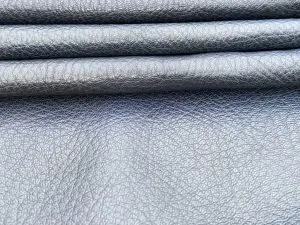
 Finished Siegel Leather goatskin.

 Finished Siegel Leather goatskin.

Regions such as West Africa, particularly Sokoto™, renowned for its pot-tanned skins prized for remarkable strength and distinctive natural grain, consistently meet this standard. They are the actual source region whose skins match what conservators encounter when they examine bindings that have held together for four hundred years.

Minimal pigment, maximum authenticity

We select only top-grade skins where the natural grain has no /minimal flaws, such that it does not need to be disguised. What you see on the surface is the actual grain of the animal. The result is leather that varies slightly from hide to hide, just as historical bookbinding leathers always have. That variation is not a defect. It is evidence of authenticity.

Sulfur-controlled chemistry

Our NTND goatskin and SF calf are produced using sulfur-controlled formulations verified through laboratory analysis. The significance of this is easy to understate: even leather marketed as “vegetable-tanned,” “archival,” or “conservation grade” is frequently not tested for sulfur content. The label describes an intent, not a verified chemistry. Our testing confirms what is actually in the leather.

This level of chemical accountability is rare in the contemporary market, although it was standard practice in the finest tanneries of the nineteenth century. So, we have not invented a new standard, we have simply maintained one that most of the industry has allowed to lapse.

Our Available Leathers

Every leather we offer has been developed in response to the specific needs of binders and conservators, not fashion or upholstery markets. Each skin reflects the sourcing and chemical standards described above. Below is a partial listing—contact us for the full range or for guidance on which leather suits a specific project.

Further Reading

For those who want to go deeper, the following external resources are worth your time:

© Siegel Leather  ·  Leather Knowledge Series  ·  Questions? Contact us

Leather Knowledge Series: Why Leather for Libraries Still Matters Today

Welcome back to the Siegel Leather Insights Blog – your resource for bookbinding leathers, specialty leathers, and the timeless knowledge behind leather craftsmanship. In this part of our Leather Knowledge Series, we focus on one of the most important foundational texts in our field: Leather for Libraries (1905).

If you’re a bookbinder, conservator, or historian, this publication is essential reading. It remains one of the most comprehensive studies on leather durability ever undertaken and continues to shape the production standards we uphold today at Siegel Leather – trusted bookbinding leather suppliers since 1932.

Leather for Libraries: A Must-Read for Anyone Working with Bookbinding Leather

We strongly encourage anyone interested in bookbinding leathers to read the first 30 pages of Leather for Libraries, available freely online. It’s concise, accessible, and surprisingly engaging especially for a century-old text.

The report was published in 1905 and represents the conclusions of the most extensive survey of leather-bound library books ever conducted. It remains a cornerstone reference for any supplier or craftsman committed to producing lasting materials.

Read or Download Leather for Libraries

What Makes It So Important?

The authors of Leather for Libraries were deeply passionate about the preservation of books and equally critical of poor tanning practices that led to the rapid degradation of bindings.

Key takeaways include:

  • Avoid mechanical manipulation: The text emphatically warns against splitting hides or applying artificial grain, practices that weaken leather structure and shorten lifespan.

  • Use traditional tanning methods: Vegetable tanning is favored, with specific guidance on the origin and handling of skins.

  • Beware of poor chemical use: The study criticizes the overuse of synthetic additives in favor of natural, tested agents.

  • High standards, strong language: On page 23, the authors even joke that leather producers who violate preservation standards should face jail time.

Their seriousness is matched by meticulous detail. This report laid the groundwork for standards adopted by His Majesty’s Stationery Office, which oversaw leather used in English libraries and still influences decisions made by premium leather suppliers today.

Why This Still Matters in 2025

At Siegel Leather, we believe in learning from the past to make better products today. Many modern tanneries cut corners, we don’t.

Our specialty leathers are carefully selected and naturally tanned to ensure long-term durability, in line with the Leather for Libraries standards.

If you’re passionate about all things bookbinding, whether for restoration or new design, this short read will give you a foundation that few others in the field have taken the time to study.

Let’s Talk Leather

Have questions about the book? Curious about how it connects to our current materials and tanning processes? We’re always happy to discuss.

Steven Siegel Leather

Email: [email protected] Or [email protected] for product inquiries

Phone: +1 (336) 293-7624 7

1147 Huntingdon Road,
Winston-Salem, NC 27104

For Further Reading


Looking for Archival-Grade Bookbinding Leather?

Siegel Leather is a trusted name among bookbinding leather suppliers globally. Our materials are used by libraries, conservators, and master binders who value quality over compromise.

Explore our full range of bookbinding leathers and discover why tradition and craftsmanship still matter.

Full Grain Leather: Classical vs. EU Definition

In this article, we clarify how today’s official standards differ from traditional definitions, and why Siegel Leather continues to uphold the original meaning of full grain leather for professional bookbinders, conservators, and specialty leather artisans.

At Siegel Leather, we’ve been supplying bookbinding leathers and specialty leathers to professionals for nearly a century. But in a marketplace where the term “full grain leather” is often stretched, it’s important to distinguish between the classical definition and the modern regulatory definition of what makes a leather full grain

This article explains what full grain leather truly means, why it matters for bookbinding, and how our leathers continue to meet the highest standards for durability, workability, and historical authenticity.

What Is Classical Full Grain Leather? (Definition & Qualities)

By classical definition, full grain means no buffing of the grain – period. It does not mean “minimal alteration” or “limited modification.” Any buffing or sanding disqualifies a hide from being full grain.

According to the Leather Naturally terminology guide, the term refers to leather that retains the natural grain layer, free of mechanical or surface modification.

The finest classical full grain leathers, typically only the top 5–10% of a tannery’s output have:

  • Only the hair removed
  • No buffing, sanding, or grain manipulation of any kind
  • No embossing, plating, or heavy finishing
  • A natural grain surface that remains fully visible and untouched

These hides are naturally beautiful and exceptionally rare. Altering them would be, as we often say, “like adding a mustache to the Mona Lisa.”

This is the benchmark Siegel Leather has used for more than 100 years, and it remains the gold standard for bookbinders and specialty leather suppliers worldwide.

EU Definition of Full Grain Leather Explained

The European Union also prohibits buffing of the grain in its definition of full grain leather – a principle supported by ISO 15115 leather terminology standards.

However, the EU standard allows a much broader range of surface treatments, including:

  • Full pigmentation or semi-aniline finishing
  • Embossing, plating, glazing, or grain-printing
  • Processes that can cover or disguise the natural grain appearance

The issue is not buffing, since both classical and EU definitions forbid it, but rather that the EU allows heavy surface treatments that can mask the character of the hide.

Our concern is simple:
If the natural grain is completely disguised under finishes and embossing, is it still meaningful to call it full grain?

Why Classical Full Grain Leather Matters in Bookbinding

For professional bookbinders, conservators, and collectors, classical vegetable-tanned full grain leather remains unmatched.

It is:

  • Highly receptive to gold tooling, blind tooling, and albumen work
  • Ideal for paring and shaping
  • Naturally durable and long-lasting
  • Authentic in look and feel, prized by artisans and historians alike

It’s important to note that while vegetable tanning is preferred for bookbinding leathers, it is not the standard for shoes, handbags, garments, or other categories where different tanning methods perform better.

For artisans seeking authentic bookbinding leather suppliers, classical full grain remains the enduring choice.

Full Grain Bookbinding Leathers That Meet Classical Standards

Our selection of vegetable-tanned bookbinding leathers includes only hides that meet the true, classical definition of full grain.
Some of our top offerings include:

  • SF Calf
  • UK Calf
  • Natural Sheepskin
  • Natural Goat
  • .5mm Veg Goat
  • Smooth Historical Goat
  • Capra Granulosa
  • Sokoto™ Morocco
  • Sokoto™ Traditional
  • Genuine Levant

These materials are lab-tested, time-honored, and trusted by the world’s most discerning binders and institutions.

To explore more, visit our collection of bookbinding leathers and vegetable-tanned leathers like the NTND Traditional Red crafted to meet both traditional and modern specifications.

A Tradition Built on Integrity

At Siegel Leather, we remain one of the few suppliers in the world that still uphold the classical definition of full grain leather.
By honoring this long-standing tradition, we ensure that bookbinders, conservators, and fine edition publishers can continue to rely on us for authentic materials of the highest quality.

We also support global quality and sustainability standards, such as those upheld by the Leather Working Group.

Have questions about grain quality, tanning methods, or leather standards?
We’re here to help. When sourcing for library rebinding, fine editions, or restoration projects, Siegel Leather is your partner in excellence.

 [email protected]

About the Author

Siegel Leather has been a trusted supplier of premium-quality bookbinding and specialty leathers to artisans and craftspeople for over a century.
We specialize in traditional full grain and vegetable-tanned leather materials, maintaining the highest industry standards while preserving time-honored leather crafting traditions.
For authentic materials that meet both traditional and modern quality specifications, professionals worldwide rely on Siegel Leather’s expertise and commitment to excellence.