Skip to content

How to Remove Oil Stains from Bookbinding Leather (Without Ruining It)

All Things Leather

All About Bookbinding Leathers: What Makes the Best Leather for Books?

Welcome to the Siegel Leather Insights Blog, your trusted resource for all about bookbinding, specialty leathers, and the timeless art of leather craftsmanship. Whether you’re a master bookbinder, a conservator, or simply passionate about the preservation of fine books, this post explores the science, history, and technique behind the very best bookbinding leathers.

At Siegel Leather, we supply premium, full-grain vegetable-tanned leathers – free from mechanical embossing – to professional bookbinders, conservators, and collectors around the world. Today, we’re taking a closer look at why mechanically grained leathers are discouraged in archival and library-grade bookbinding, and what truly defines long-lasting, high-integrity specialty leathers.

Mechanically Grained Bookbinding Leathers

The Origins of Leather Standards in Bookbinding

In 1842, the eminent physicist Michael Faraday began investigating the rapid decay of leather-bound books in libraries across the UK. His findings revealed that newer leathers – particularly those produced using early chrome tanning and synthetic chemicals – were deteriorating much faster than their predecessors.

Faraday’s observations prompted the formation of The Committee of the Society of Arts on Leather for Bookbinding in the late 19th century. This diverse group of scientists, librarians, and bookbinders conducted a sweeping study of bookbinding leathers exposed to various climates and storage conditions. Their mission: to define which leathers were suitable for preserving books for future generations.

What the Committee Recommended:

One of the committee’s most influential outcomes was a strict recommendation from His Majesty’s Stationery Office:

“The binder undertakes not to use… leather embossed or grained artificially.”

This directive was based on significant evidence that mechanically altered leathers that had been embossed, boarded, or artificially textured were more likely to fail over time. While these leathers were often more visually appealing and cheaper to produce, they lacked the structural integrity needed for longevity.

Understanding the Leather Structure: Grain vs. Corium

High-quality bookbinding leather consists of two primary layers:

  • The Grain – the outer surface from which the hair has been removed.
  • The Corium – the fibrous layer beneath the grain.

The connection between these layers known as the grain-corium interface is critical. Mechanically graining leather disrupts this delicate bond, leading to double hiding, weak breaks, and premature separation of the leather layers. For serious bookbinding leather suppliers, maintaining the natural integrity of this interface is non-negotiable.

Siegel Leather’s Archival-Grade Leathers

At Siegel Leather, we offer a curated selection of vegetable-tanned leathers developed specifically for bookbinding and archival use. These leathers are lab-tested, historically consistent, and most importantly, free from mechanical manipulation.

Here’s a sample of our trusted collection:

  • SF Calf
  • UK Calf
  • Natural Sheepskin
  • Natural Goat
  • .5mm Veg Goat
  • Smooth Historical Goat
  • Capra Granulosa
  • Sokoto™ Morocco
  • Sokoto™ Traditional
  • Genuine Levant

Each hide is carefully selected and treated using traditional tanning methods to ensure beauty, durability, and historical authenticity. As trusted bookbinding leather suppliers, we pride ourselves on offering materials that meet and exceed the standards established by generations of craftsmen and preservationists.

Further Reading

For those who want to explore more about the history of leather in library science and conservation:

Report of the Committee on Leather for Bookbinding

Leather for Libraries

We Value Your Input

Is this information helpful for your practice or project? We’d love to hear from you.
If you have questions, email us directly at [email protected]. We’re always here to support bookbinders, restorers, and artisans in their pursuit of excellence.

Looking for Premium Bookbinding Leather Suppliers?

Choose Siegel Leather. Discover more in our full collection of specialty leathers for premium bookbinding.

How to Remove Oil Stains from Bookbinding Leather (Without Ruining It)

At Siegel Leather, we’re committed to helping our customers preserve and care for the fine specialty leathers we supply – including our signature Sokoto™ goatskin. Sometimes, even with the best intentions, mistakes happen. And when they do, we’re here to offer guidance.

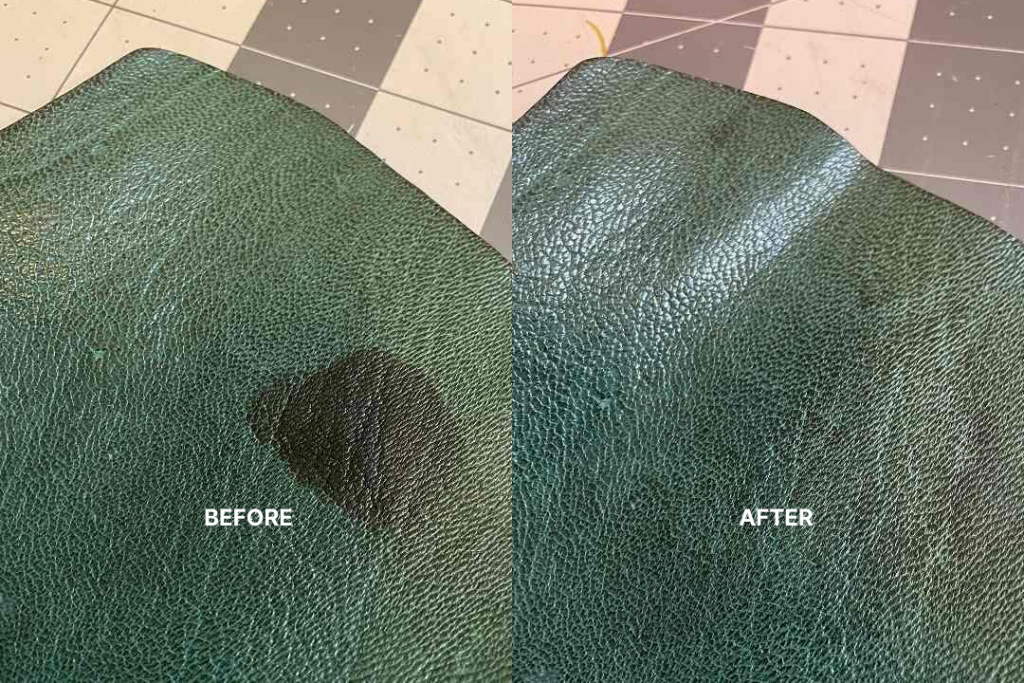
We’ve received an email from a concerned customer who had been advised – incorrectly – to use mink oil to clean excess gold foil off of Sokoto™ leather. The result? A deep, dark oil stain that nearly ruined the project.

What Went Wrong: Why Mink Oil Should Never Be Used on Sokoto™

Mink oil and other heavy, penetrating oils are not suitable for cleaning bookbinding leathers, especially premium vegetable-tanned varieties like Sokoto™ Traditional or Sokoto™ Morocco.

These oils are:

  • Highly absorbent and difficult to remove
  • Known to darken leather permanently
  • Often incompatible with archival materials
  • Likely to damage the grain-corium structure of fine goatskin

In this case, the leather absorbed the oil unevenly, leaving a large blackened stain across the cover, a heartbreaking sight for any binder.

The Solution: How We Helped Remove the Stain

We advised the customer to attempt cleaning using a polar organic solvent in this case, butane, which is commonly found in small amounts in standard lighter fluid.

Important: This process should be done with great care and in a well-ventilated area. Here’s the method we recommended:

Leather Oil Stain Removal – Safe DIY Method

  1. Apply a small amount of lighter fluid (butane-based) to a clean white cloth or paper towel
  2. Gently blot the stained area — do not rub, as friction may damage the grain
  3. Use short, repeated dabs, allowing time between applications
  4. As the solvent evaporates, it may draw oil up and out of the leather
  5. Continue blotting with fresh clean cloths until no more oil transfers

Before & After: A Successful Recovery

Thankfully, this method worked. The stain lightened significantly, and the customer was able to salvage the project — to everyone’s relief.

Leather Care Advice from Siegel Leather

Our leathers are produced for archival-quality performance, but their natural, unaltered grain also makes them more sensitive to improper care methods.

Here are a few best practices:

  • Never apply oils, waxes, or conditioners not tested on archival goatskin
  • Avoid heavy rubbing, solvents, or water-based cleaning
  • Test any cleaning method on a scrap or hidden area first
  • Contact us directly before attempting repairs or restoration

We’re Here to Help

If you’re unsure how to care for your leather or encounter a mishap, we’re just a message away.

Siegel Leather: Bookbinding Leather Suppliers Who Care

We don’t just sell bookbinding leathers, we also support the community that uses them. Are you a first-time customer or a seasoned binder working with specialty leathers? You will find invaluable resources on our website and should you have questions or concerns, we are always available to guide you through best practices and help solve problems when they arise.